COMPLETE HEALTH MONITORING
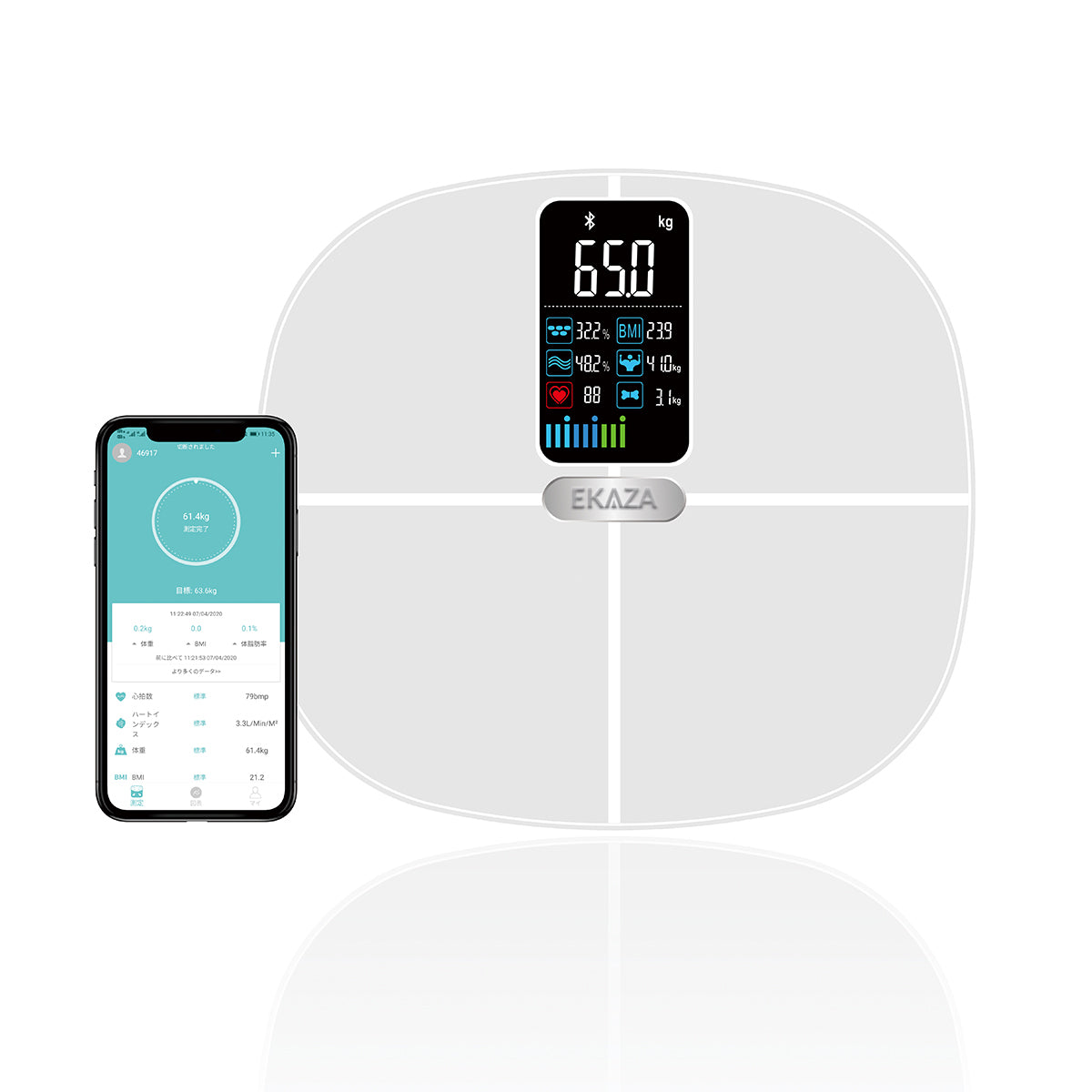
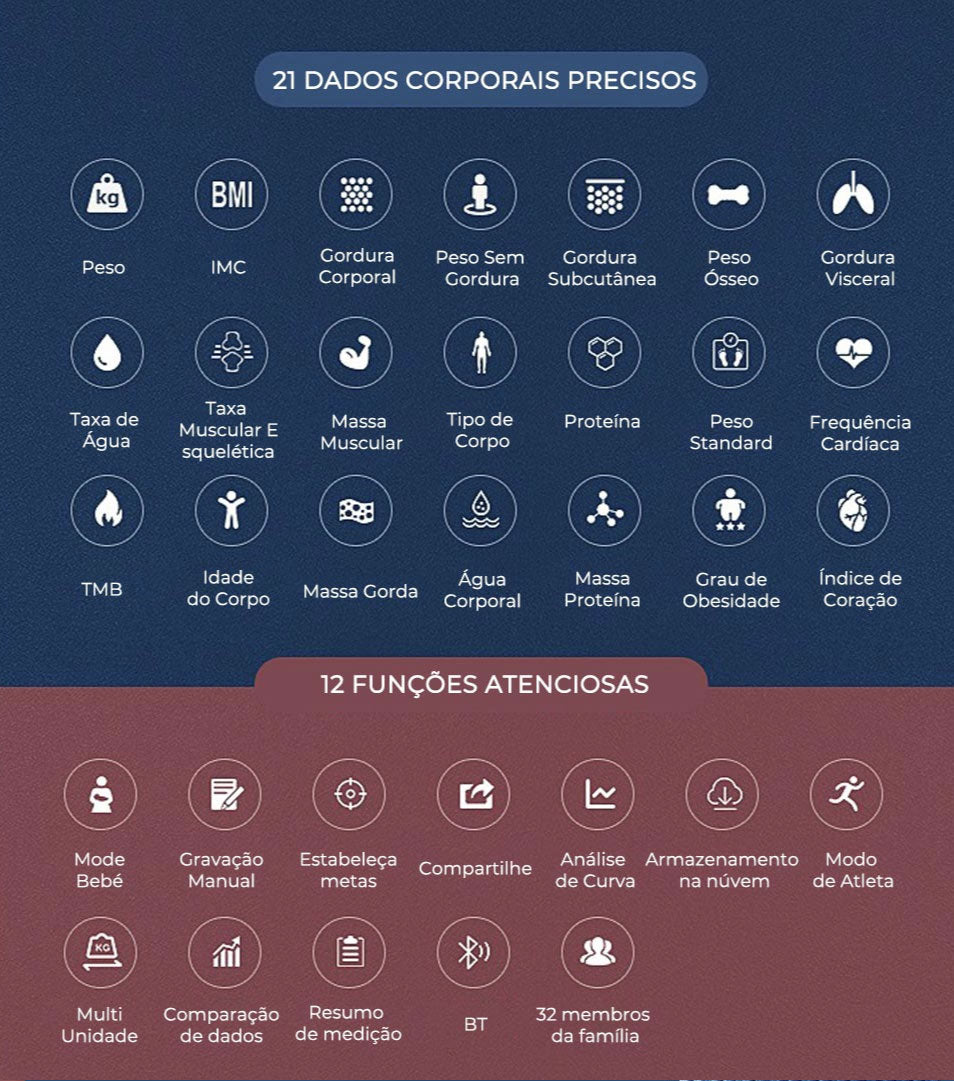
Get a detailed view of your health with 17 measurement indices, including BMI, body fat, muscle mass, body water, and more. This scale offers comprehensive monitoring that helps you understand and improve your overall well-being.
STAY ACTIVE AND HEALTHY
Track your heart rate and adjust your workouts to ensure a more active and healthy lifestyle. The heart rate measurement function is ideal for monitoring cardiovascular health and preventing diseases related to a sedentary lifestyle.
HIGH PRECISION SENSOR
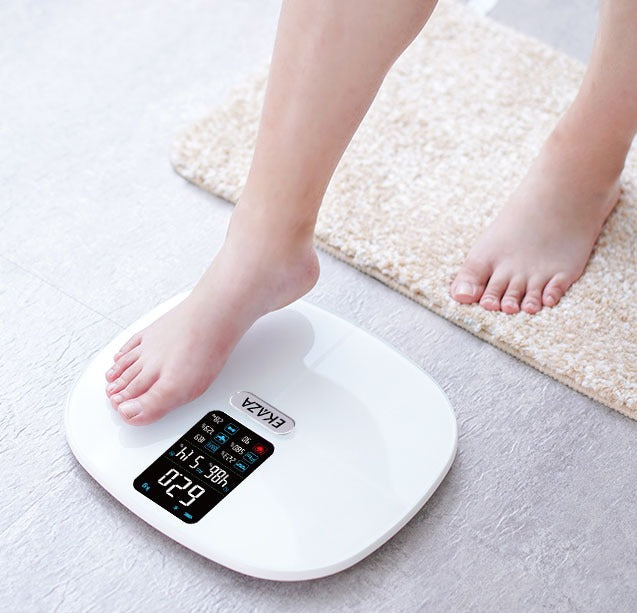
Equipped with high-precision sensors and a full display, the EKAZA model ensures more accurate readings of weight, body fat, and other vital indicators. Electrode and weight technology improves measurement accuracy and provides detailed reports on your health.
ADVANCED FEATURES
Advanced Functions : Baby mode, manual recording, goals, data sharing, curve analysis, cloud storage, multi-unit support, data comparison, measurement summary.
- Balance Measurement : Assess your body's balance to improve posture and stability.
- Multi-user : Stores data for up to 24 people, making it ideal for the whole family.
- Athlete Mode : Adjusts measurements to provide more accurate data for people with high muscle mass.
- Body Composition Analysis : Detailed reports on your body composition, allowing for adjustments to your diet and exercise.
HEALTH INDICATORS
• Weight : Total body mass measurement, including all body components such as muscle, bone, water, and fat.
• BMI (Body Mass Index) : A calculation that relates an individual's weight and height to assess whether the person is within a healthy weight range. Calculated by dividing weight in kg by height in meters squared.
• Fat (Body fat percentage) : Percentage indicating the amount of fat in the body relative to total weight. It is important for assessing body composition and associated health risks.
• Fat-free body weight : An estimate of total body weight excluding fat. Helps to better understand the amount of lean mass in the body.
• Subcutaneous Fat (in %) : Percentage of fat stored directly under the skin. It is an indicator of how fat is distributed in the body and can influence health and aesthetics.
• Visceral fat index : A measure of the amount of fat stored around internal organs, such as the liver and intestines. This type of fat is associated with a higher risk of metabolic diseases.
• Body Water (Percentage of water in the body) : Percentage of water present in the body. Body water is essential for various physiological functions, such as temperature regulation and nutrient transport.
• Muscle Mass (Muscle mass recorded in KG) : Measurement of the amount of muscle mass in the body in kilograms. It is an important indicator of muscle strength and health.
• Skeletal Muscle Mass (in %) : Percentage of skeletal muscle mass relative to total body weight. Skeletal muscle mass is crucial for movement and maintaining posture.
• Fat Mass : Total amount of fat in the body in kilograms. This value helps monitor changes in body composition and identify excess fat.
• Body Type : Classification of the body based on characteristics such as proportions and distribution of fat and muscle. It can be categorized into types such as ectomorph, mesomorph, and endomorph.
• Degree of Obesity : Assessment of the amount of body fat in relation to total weight to determine if the individual is obese and the degree of that obesity.
• Bone Mass (Skeletal Weight in Kg) : Measurement of the weight of bones in the body. Important for assessing bone density and the risk of bone diseases, such as osteoporosis.
• Protein (Protein rate in %) : Percentage of protein in the body. Proteins are essential for building and repairing tissues and for immune function.
• Standard Weight : Estimated ideal weight for an individual's height and body structure, considering health standards and medical recommendations.
• Metabolism (Basal metabolic rate) : The amount of calories the body uses at rest to maintain vital functions, such as breathing and blood circulation.
• Heart Index : A measure related to cardiovascular risk based on parameters such as body fat and metabolic rate. It helps assess heart health.
• Age (Body age indicator based on basal metabolism) : Estimate of body age based on basal metabolic rate and body composition, reflecting metabolic health and physical aging.