


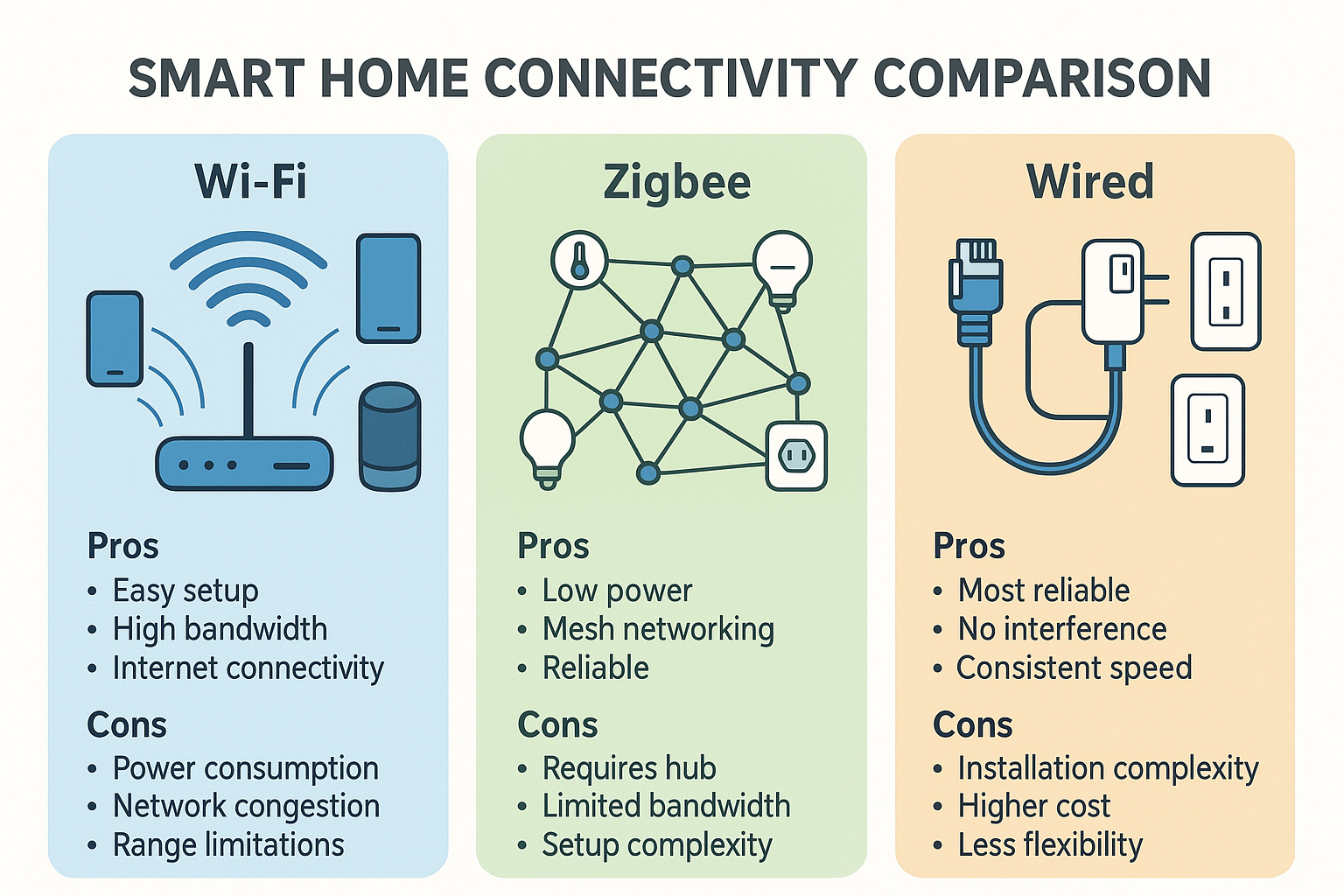
With the growing popularity of smart homes, many people wonder what the best solution is for connecting all their devices: Wi-Fi, Zigbee, or cables? Each of these options has its advantages and disadvantages, and it's important to understand the differences between them to make the best decision for your smart home.
What is Wi-Fi and how does it work?
Wi-Fi is the most common option for connecting devices in a smart home. It works through radio waves that allow wireless communication between devices and the router. Wi-Fi offers a fast and stable connection, which is ideal for devices that require bandwidth, such as security cameras and smart TVs.
What is Zigbee and what are its advantages?
Zigbee is a low-power wireless communication protocol that is frequently used in smart home devices. One of Zigbee's main advantages is its energy efficiency, meaning devices can operate longer on a single battery charge. Additionally, Zigbee creates a mesh network that can extend throughout the house, ensuring a stable connection even for devices far from the hub.
Why use cables in a smart home?
Although Wi-Fi and Zigbee are popular options, some users choose to use cables to connect their devices in a smart home. Cables offer a more reliable and secure connection, without interference from other devices or physical obstacles. Furthermore, cables ensure a consistent connection speed, without signal fluctuations.

Wi-Fi or ZigBee? Find out which is best for your smart home.
Ekaza is now an official supplier of smart home products for Vivo!